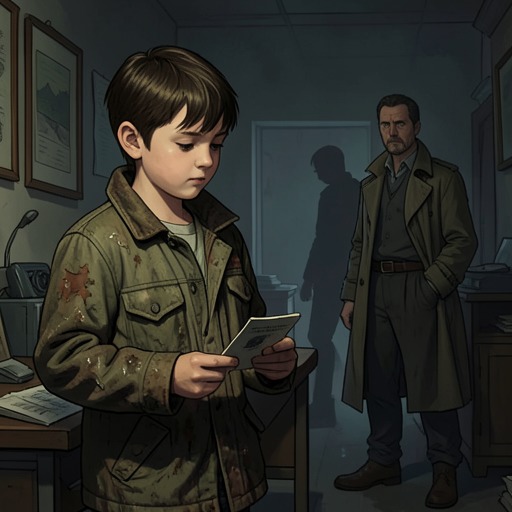
Castle Rock Middle School
Needful ThingsCastle Rock Middle School is both a dated civic building and a junction in the town’s unraveling: Brian Rusk sets out from it to perform a prank arranged through Leland Gaunt, Sally Ratcliffe turns its basement and principal’s office into stages for her own compelled mischief, and Alan Pangborn arrives there hoping to question Brian about a double murder. Its everyday corridors and school routines lend the escalating disorder an unsettlingly ordinary setting.
Building and Setting
The school stands between the Post Office and the Library, a red-brick structure built in 1926. Its forbidding appearance reflects an older civic idea of what a school should look like: the building seems more like a reformatory than a place for children. The town has repeatedly come close to deciding to replace it with a warmer, more open school, but that proposed change has not yet happened. The classrooms remain cold in winter, and the grounds include a playground likened to a penitentiary exercise yard.
That architecture matters to the school’s daily life. The building is not simply a backdrop for the children’s routines: its institutional severity reaches into the rooms where vulnerable students are expected to learn and speak. At the same time, the novel places private schemes inside this thoroughly public, familiar institution, allowing menace to take shape amid bells, buses, teachers, and school offices.
Sally Ratcliffe’s Room and Work
Sally Ratcliffe’s speech-therapy room occupies a neglected basement space between the furnace room and a supply closet. Six pupil desks and her own desk leave little room to move. She nevertheless tries to make it welcoming for children who may already find therapy frightening because of teasing from classmates or questions from parents. Mobiles hang from dusty ceiling pipes; pictures of television and rock stars brighten the walls; and a Garfield poster on the door offers encouragement to children struggling to speak.
The room’s cheerfulness contrasts with its cramped location and the burden of Sally’s neglected paperwork. Although the school year has been in session only five weeks, her files are already badly behind. One afternoon she returns the files to their drawer, shuts and locks it, and tells herself that she is leaving because the weather is too fine to remain in the basement. The explanation is incomplete: she has become absorbed by the supposed holy-wood splinter she purchased at Needful Things and wants to sit at home contemplating it. The school’s ordinary work is losing its hold as Gaunt’s staged bargain redirects her attention and behavior.
Brian and the Thursday Routine
Thursday’s final period is reserved for activities. Because Brian is an honor student and will not join a school activity until auditions for the Winter Play begin, he is allowed to leave early; the arrangement balances his late Tuesdays. One Thursday he exits through a side door almost as soon as the sixth-period bell ends, with his books and the rain slicker his mother insisted he bring bulging from his packsack.
Brian rides away with his heart pounding, convinced he has a small, almost amusing chore to complete. The task has come to him while he daydreamed in mathematics. That buoyant anticipation gives way to a far darker image when Alan later waits near the school for him: Brian approaches slowly on his bicycle, bent over the handlebars, with a Playmate cooler in the basket. The school’s release bell and routine early departure thus frame Brian’s movement from an apparently ordinary afternoon into Gaunt’s coercive chain of pranks and consequences.
Sally’s Prank at the School
Sally’s purchase at Needful Things includes a promise to play a prank on Frank Jewett, the school principal. When she returns to the building after the three o’clock bell, the hall is emptying into a bright afternoon: children cross the lawn toward the waiting buses while her heels click along the corridor. She carries an envelope bearing Jewett’s name, turned inward against her clothing. The envelope has been left behind the cafeteria garbage cans, just where Gaunt said it would be, and Sally herself has written the name on it.
She enters Jewett’s office, places the envelope on his desk, and then takes heavy scissors from a desk drawer to force open a locked lower drawer. Levering the scissors into the gap splinters the wood. The act frightens her, but she also finds it thrilling. In that turn, a teacher whose work is built around helping children becomes an intruder in her own workplace, carrying out a scheme whose details have been prepared for her by Gaunt. The office’s routine order—desks, drawers, messages, and the principal’s absent presence—makes the trespass both intimate and consequential.
Sally’s fixation on the splinter and her break-in are linked to the school in a second way: she has left behind the supportive, patient labor of the speech-therapy room for a supposedly harmless prank that is already being engineered to implicate and inflame others. The school is therefore not merely where the prank occurs. Its personnel and spaces are among the connections Gaunt exploits to turn isolated desires and resentments into action.
Alan’s Investigation and the School’s Wider Role
Alan comes to the Middle School because he believes Brian may be the key to understanding a double murder. He expects that questioning the boy away from his mother will produce more candid answers; he worries that she might otherwise interrupt or discourage him from responding. Alan tells Polly Chalmers that he needs to speak with someone at the school and that the matter concerns Wilma Jerzyck, with Nettle Cobb also potentially involved. He then waits for Brian as the flow of students leaving the school thins.
The school connects Alan’s investigation to both Brian’s actions and Sally’s parallel entanglement. Jillian Mislaburski recalls that a Rusk boy was involved but cannot confidently remember his name, initially offering alternatives before Alan identifies him as Brian. At the same time, Sally’s planned prank unfolds in the office while Alan watches for the boy outside. The principal’s ordinary professional world is also caught up in the scheme: Frank Jewett and geography teacher and basketball coach Brion McGinley return from a meeting with other coaches, joking as they enter the outer office, unaware that Sally has just forced a locked drawer.
Across these scenes, Castle Rock Middle School gathers together routine, vulnerability, and manipulation. Its bells and early-release rules set Brian in motion; its basement room reveals Sally’s compromised attention to the children she serves; and its office becomes the site of a concealed intrusion. Alan’s arrival gives the same institution a different function, making it a point from which the town’s apparently separate troubles begin to look connected.